Slovenia’s Largest Alpine Lake and One of the Julian Alps’ Best Hikes
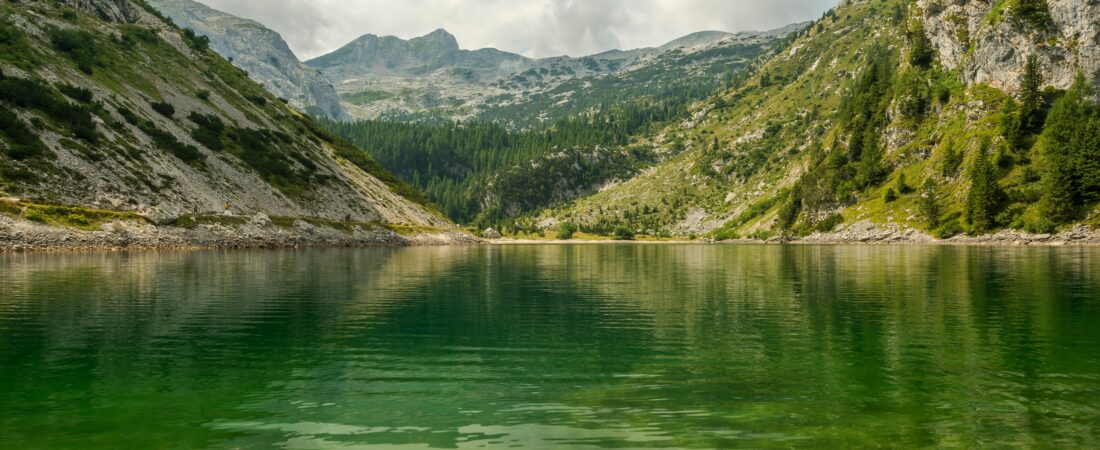
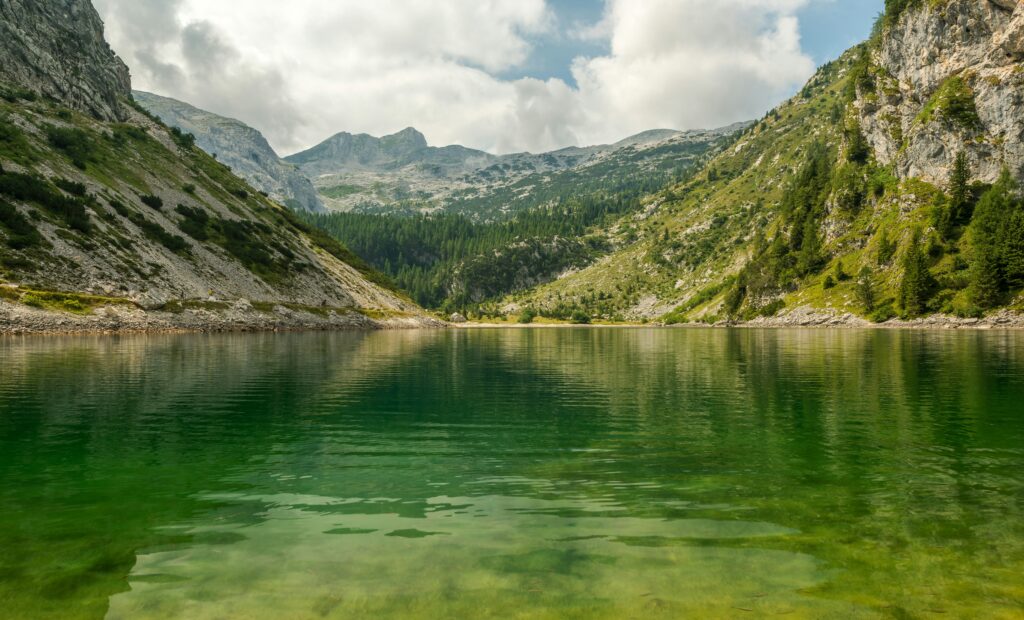
Lake Krn (Krnsko jezero) is one of Slovenia’s most impressive alpine lakes, located at 1,391 metres in the Julian Alps and protected within Triglav National Park. Formed during the last Ice Age, the lake occupies a natural glacial basin beneath the slopes of Mount Krn and remains one of the country’s best-preserved mountain landscapes. Clear water, alpine meadows, limestone peaks and a remarkable First World War heritage combine to create a destination that appeals to hikers, photographers and anyone looking to experience Slovenia beyond its better known attractions.
Unlike many popular lakes, Lake Krn has remained largely untouched by development. There are no roads leading to the shoreline, no hotels overlooking the water and no commercial lakeside promenade. Every visitor arrives on foot, following mountain trails that climb through forests, across alpine pastures and into the high mountains. This limited access has helped preserve both the lake’s fragile ecosystem and the peaceful atmosphere that defines the area today.
The lake lies above the Soča Valley, placing it within easy reach of Kobarid, Bovec and Tolmin. The most popular route begins in the Lepena Valley and follows a well-marked trail suitable for anyone with a reasonable level of fitness. The climb is steady rather than technical, making Lake Krn an achievable goal for most hikers who come prepared with appropriate footwear, clothing and enough time to enjoy the journey.
The surrounding landscape tells two stories. The first is geological. Thousands of years ago, glaciers carved deep valleys and natural basins throughout the Julian Alps before retreating as the climate warmed. Lake Krn formed in one of these basins and continues to receive fresh mountain water from springs, rainfall and seasonal snowmelt.
The second story is historical. During the First World War, the Krn mountain range formed part of the Isonzo Front, where Austro-Hungarian and Italian forces fought across steep ridges and exposed mountain slopes under extremely difficult conditions. Military roads, mule tracks, trenches and defensive positions remain scattered throughout the area, providing a lasting reminder of one of Europe’s highest battlefields.
Today, Lake Krn offers something increasingly difficult to find in the modern world: an alpine landscape where nature remains the main attraction. The absence of traffic, commercial development and large crowds allows visitors to experience the mountains much as they have appeared for generations. The reward comes not only from reaching the lake itself, but from the journey through forests, meadows and limestone terrain that gradually reveals one of Slovenia’s most remarkable natural destinations.
Elevation: 1,391 metres above sea level
Location: Triglav National Park, Julian Alps, Slovenia
Lake type: Glacial alpine lake
Hiking time: 2½–3 hours one way from Lepena
Difficulty: Easy to moderate mountain hike
Highest nearby peak: Mount Krn (2,244 m)
Best time to visit: Late June to October
Swimming: Not permitted
Nearest mountain hut: Planinski dom pri Krnskih jezerih
Distance from Ljubljana: Approximately 110 km to the Lepena trailhead
Location, Landscape & History
Lake Krn lies in the western part of the Julian Alps within Triglav National Park, Slovenia’s only national park. The lake sits beneath the southern slopes of Mount Krn, one of the most recognisable peaks overlooking the Soča Valley. Although the setting feels remote, access is straightforward. Kobarid lies around 22 kilometres from the main trailhead, Bovec approximately 25 kilometres and Tolmin about 40 kilometres. From Ljubljana, the drive to Lepena usually takes around two hours, making Lake Krn a practical destination for a full-day excursion or the highlight of a longer stay in the Soča Valley.
The surrounding landscape owes its appearance to the last Ice Age. Powerful glaciers advanced through these mountains, carving valleys, smoothing limestone rock and creating natural depressions that later filled with meltwater. Lake Krn formed in one of these glacial basins and remains the largest high-mountain lake in Slovenia. Measuring almost 400 metres in length and reaching a depth of around 17 metres, the lake reflects the rugged limestone peaks that surround it while supporting a delicate alpine ecosystem protected under national legislation.
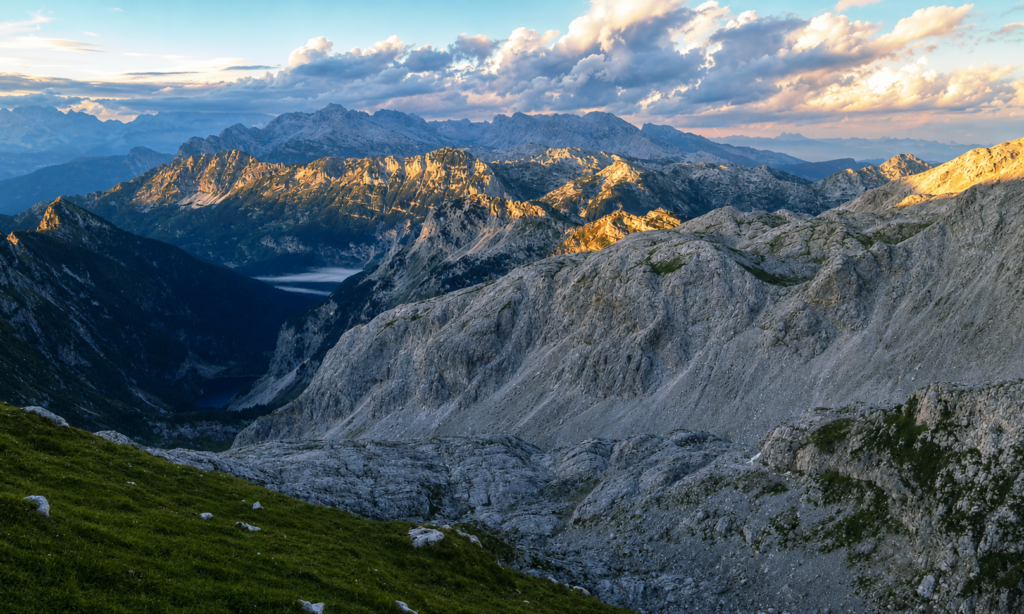
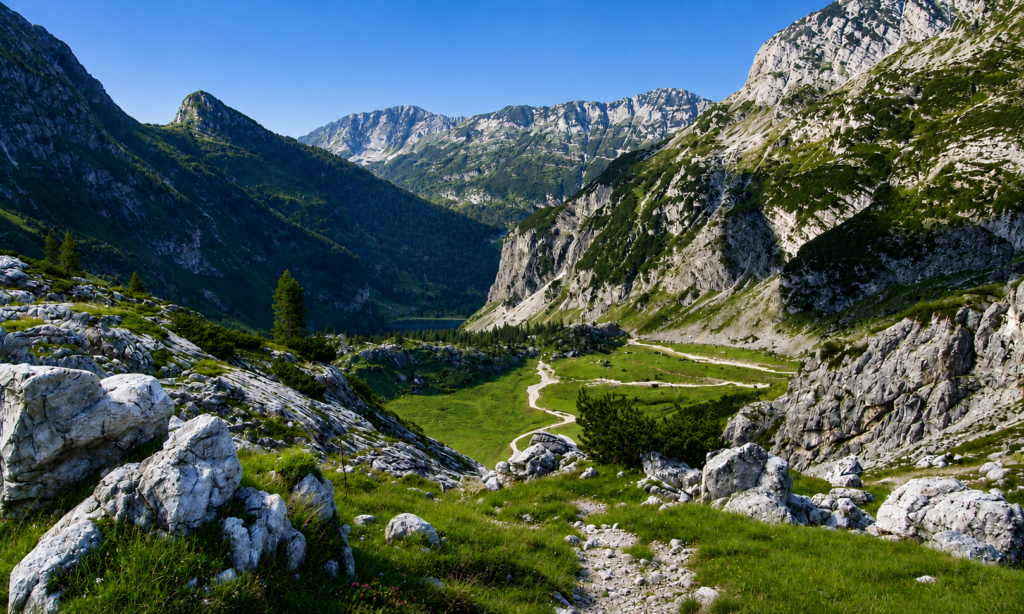
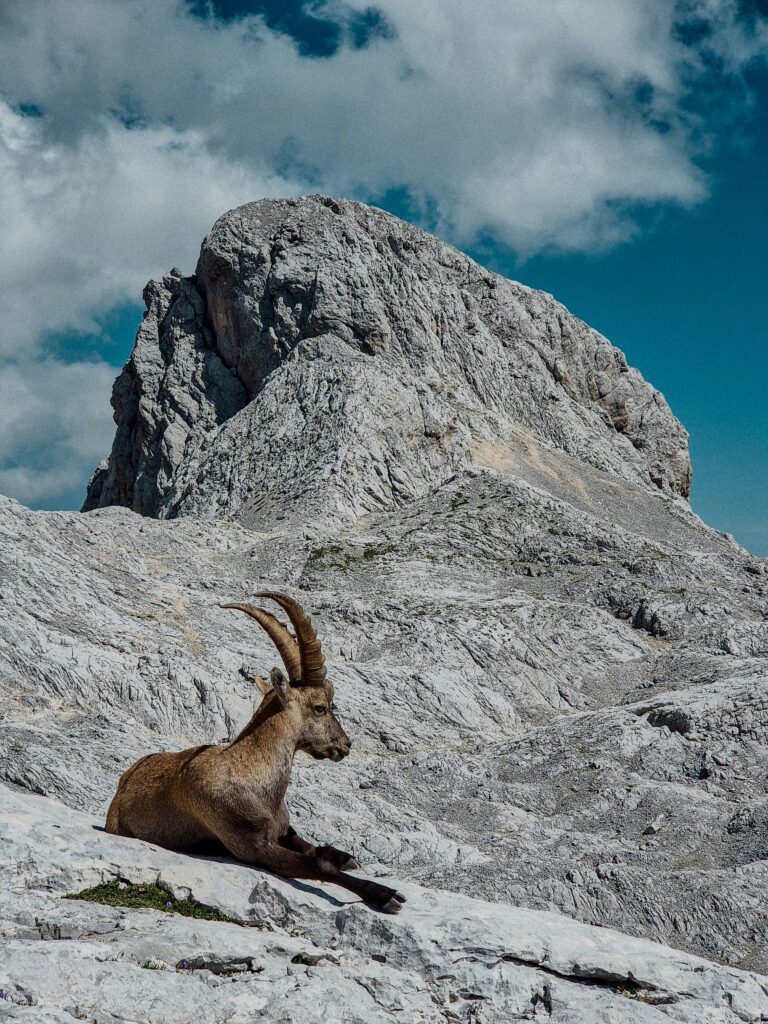
The terrain changes noticeably from valley to summit. Lower elevations are covered by mixed forests of beech, spruce and fir. As the trail climbs higher, dense woodland gives way to mountain pastures where livestock continue a centuries-old tradition of seasonal grazing. Beyond the tree line, the landscape becomes increasingly rocky, with limestone cliffs, alpine grassland and scattered dwarf pine dominating the scenery. These changing habitats support a rich diversity of wildlife, from chamois and marmots to golden eagles soaring above the ridges.
Protection of this environment is one of the primary responsibilities of Triglav National Park. Lake Krn lies within the park’s most strictly protected zone, where conservation takes priority over recreation. Activities such as swimming, camping and disturbing wildlife are prohibited, ensuring that the lake retains its exceptional water quality and ecological value. Visitors are encouraged to remain on marked trails, carry out everything they bring in and treat the landscape with the same respect shown by the generations who have lived and worked in these mountains.
Nature is only part of Lake Krn’s story. The mountains surrounding the lake also preserve an important chapter of European history. When Italy entered the First World War in 1915, the Krn range became part of the Isonzo Front, one of the most demanding mountain battlefields of the conflict. Soldiers fought on steep limestone slopes, often at elevations above 2,000 metres, where snow, ice and exposure proved as dangerous as enemy fire.
Supplying troops in such terrain required extraordinary engineering. Military roads, mule tracks, cableways and supply routes were constructed across the mountains to transport food, ammunition and equipment to front-line positions. Many of today’s hiking trails follow these same routes, allowing visitors to walk paths originally built for military logistics more than a century ago.
The summit of Mount Krn became a strategically important objective during the early stages of the war. Italian forces captured the peak in June 1915 after a difficult assault, and heavy fighting continued across the surrounding mountains until the Battle of Caporetto shifted the front line in 1917. Evidence of this history remains visible throughout the region. Trenches, stone fortifications, ruined barracks and memorials can still be found by hikers exploring the Krn Mountains, creating a landscape where natural beauty and historical significance exist side by side.
Today, the mountains have returned to peace. Forests have reclaimed former battlefields, alpine flowers grow where trenches once crossed the slopes, and the only sounds most visitors hear are flowing streams, birdsong and the distant ringing of cowbells from nearby pastures. The contrast between the area’s turbulent past and its present tranquillity forms one of the defining characteristics of Lake Krn and helps explain why it remains one of Slovenia’s most memorable mountain destinations.
Hiking to Lake Krn
The hike to Lake Krn forms an essential part of the experience. Every visitor reaches the lake on foot, following mountain trails that have crossed these slopes for generations. The route introduces the changing landscapes of the Julian Alps gradually, beginning in the valley and finishing in the high alpine environment where the lake lies beneath the imposing summit of Mount Krn.
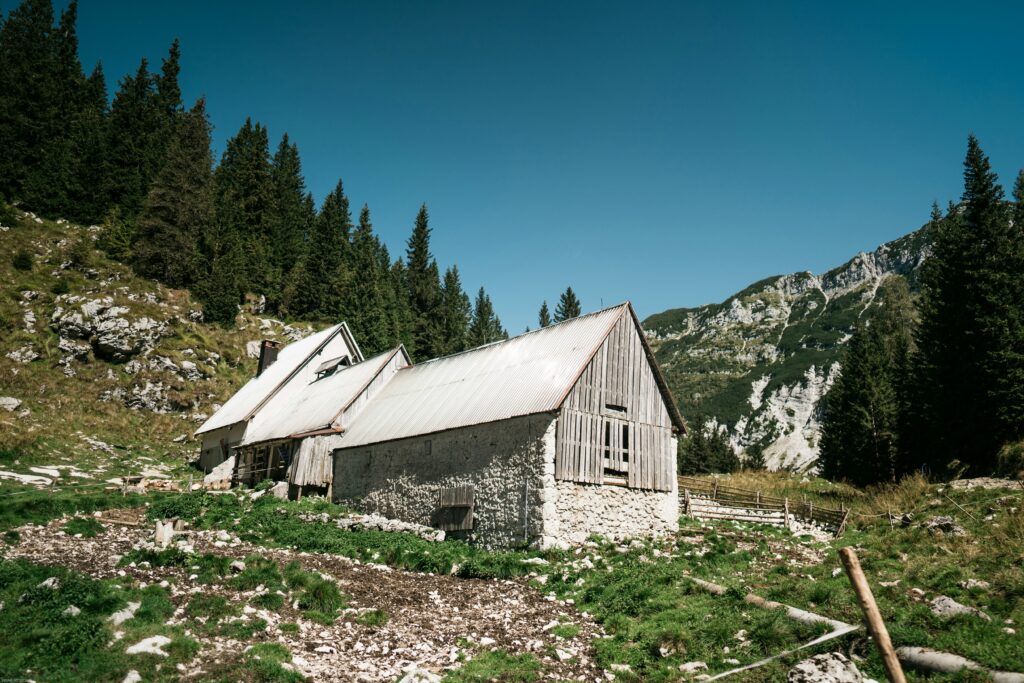
The most popular starting point is Dom dr. Klementa Juga in the Lepena Valley. A car park, information boards and trail markings make it easy to find the correct route. During the main hiking season, the car park often fills early on weekends and public holidays, making an early arrival worthwhile.
From the trailhead, the path enters a mixed forest of beech, spruce and fir. The climb begins immediately but remains steady rather than steep, allowing most hikers to establish a comfortable pace. Wooden bridges cross mountain streams, exposed tree roots weave across the path and occasional clearings offer the first glimpses back towards the Lepena Valley.
The forest provides welcome shade during the warmer months, and the sound of flowing water accompanies much of the ascent. As altitude increases, the trees gradually become less dense and the landscape opens into alpine pasture. Traditional grazing still takes place here during summer, with cattle moving freely across the meadows much as they have done for centuries. Their presence helps maintain the open grasslands that support a wide variety of alpine flowers, butterflies and other insects.
One of the advantages of the Lepena route is its variety. The scenery changes continually throughout the climb, preventing the hike from becoming repetitive. Dense woodland gives way to open meadows, rocky slopes replace forest paths and wider mountain views appear with every gain in elevation. Each section offers a different perspective on the surrounding landscape.
After approximately two hours of walking, hikers reach Planinski dom pri Krnskih jezerih, the mountain hut located only a few minutes from the lake. The hut provides meals, refreshments and overnight accommodation during the hiking season, making it a popular stopping point for both day visitors and those continuing towards Mount Krn or other peaks within the Julian Alps.
From the hut, the final approach is short and almost level. The trees begin to thin before the lake comes into view beneath the surrounding mountains. Many visitors spend several hours here, enjoying lunch, taking photographs or simply resting beside the water before beginning the return journey.
The complete hike from Lepena usually takes between two and a half and three hours each way, depending on fitness, weather conditions and the number of stops along the route. Although the trail is considered technically straightforward, it should not be underestimated. The continuous climb gains around 700 to 830 metres in elevation, requiring reasonable fitness and appropriate hiking equipment.
Alternative Routes
Several other trails reach Lake Krn, each offering a different experience.
The route from Planina Kuhinja is popular with hikers planning to continue to Mount Krn. It provides broader mountain views throughout the ascent but includes steeper sections and greater elevation changes than the Lepena approach.
More experienced hikers sometimes include Lake Krn as part of multi-day walks linking the Komna Plateau, the Seven Lakes Valley or neighbouring mountain huts. These longer routes require careful planning but allow visitors to experience a much larger section of Triglav National Park.
Continuing to Mount Krn
Many hikers choose to continue from the lake to Mount Krn, Slovenia’s sixth-highest peak. The additional climb takes approximately two to two and a half hours from the mountain hut and rewards the effort with one of the finest viewpoints in the Julian Alps.
The summit offers sweeping views across the Triglav massif, the Soča Valley, the Karavanke, the Karst Plateau and, during exceptionally clear conditions, the Adriatic Sea. First World War trenches, fortifications and memorials remain visible near the summit, providing another reminder of the mountain’s strategic importance during the Isonzo Front.
Planning Your Visit
The main hiking season generally extends from late June until October, although snow conditions vary considerably from year to year. July and August bring the warmest weather but also the highest number of visitors. September often combines stable weather, cooler temperatures and quieter trails, making it one of the best months to visit.
Mountain weather changes quickly, particularly during summer when afternoon thunderstorms are common. Starting early reduces exposure to the hottest part of the day and increases the likelihood of completing the hike before unstable weather develops.
Good hiking boots with reliable grip are essential. The trail contains loose stones, exposed roots and limestone surfaces that become slippery after rain. Lightweight layered clothing, waterproof protection, sufficient drinking water, high-energy food and a basic first aid kit should always be carried, regardless of the forecast.
Mobile phone reception is available in some areas but cannot be relied upon throughout the route. Downloading offline maps before leaving the valley is strongly recommended.
Visitors should also remember that Lake Krn lies within a protected area. Swimming, wild camping and disturbing wildlife are prohibited, while all litter should be carried back to the valley. Respecting these simple rules helps preserve one of Slovenia’s finest alpine environments for future generations.
The hike to Lake Krn demands steady effort rather than technical ability. Every stage of the journey reveals another aspect of the Julian Alps, from shaded forest and alpine pasture to rocky mountain slopes and open glacial landscape. By the time the lake appears beneath the towering limestone peaks, the walk has become as memorable as the destination itself.
Life Around the Lake
The first impression of Lake Krn is often its clarity. On calm days, the surrounding mountains are reflected almost perfectly across the surface, while the changing position of the sun gives the water different shades throughout the day. Morning light usually produces the calmest reflections, while late afternoon brings warmer colours to the limestone cliffs and alpine meadows surrounding the lake.
The lake measures almost 400 metres in length and reaches a maximum depth of around 17 metres. Its water remains cold throughout the year, fed by snowmelt, rainfall and underground springs. Even during the warmest weeks of summer, temperatures stay low, making the lake an important habitat for specialised alpine plants and aquatic organisms.
Swimming is not permitted. Lake Krn lies within the most strictly protected part of Triglav National Park, where preserving natural ecosystems takes priority over recreation. The same regulations prohibit washing, camping and lighting fires around the lake, helping maintain the exceptional water quality and peaceful character of the area.
The shoreline remains largely unchanged from its natural state. Short alpine grass, limestone rocks and small wetland areas surround the water, while the steep mountain slopes rise directly behind it. There are no piers, beaches or permanent lakeside buildings. The mountain hut sits a short distance away, allowing the lake itself to remain the centre of the landscape.
Every season changes the appearance of Lake Krn. In late spring, patches of snow may still remain on the higher slopes while alpine flowers begin covering the surrounding meadows. Summer brings long daylight hours, green pastures and grazing cattle. During autumn, cooler temperatures produce some of the clearest views of the year, while the forests lower in the valley begin to change colour. Winter transforms the entire basin beneath deep snow, leaving access to experienced mountaineers equipped for demanding alpine conditions.
Wildlife forms an important part of the Lake Krn experience, although many animals remain hidden from view. Chamois are regularly seen grazing on steep rocky slopes during the early morning and evening, while alpine marmots live among the surrounding meadows, announcing approaching visitors with their distinctive warning whistles. Golden eagles occasionally circle high above the ridges, using rising warm air to search for prey across the mountains.
The forests below the lake provide habitat for red deer, roe deer, foxes and numerous woodland birds, while the higher alpine environment supports species adapted to harsh winters and short growing seasons. Careful observers may notice alpine choughs around the mountain hut, recognised by their glossy black feathers, yellow beaks and playful flight.
Plant life changes noticeably as the trail climbs towards the lake. Mixed forests gradually give way to mountain grassland, scattered dwarf pine and hardy alpine vegetation. From late spring into summer, colourful displays of gentians, bellflowers, globeflowers and other alpine species appear across the meadows. Several protected plants, including the famous edelweiss, also grow within the Krn Mountains, although picking any wildflowers is prohibited throughout the national park.
The continued use of nearby mountain pastures adds another dimension to the landscape. Seasonal grazing has shaped these meadows for centuries, creating habitats that support a rich variety of flowering plants and insects. During summer, the sound of cowbells often carries across the basin, providing a reminder that traditional farming remains part of everyday life in the Julian Alps.
Lake Krn is also one of the region’s most rewarding locations for photography. Early mornings usually provide calm water and soft light, creating ideal conditions for reflections. Autumn often offers exceptional visibility after the first cold nights, while changing weather can dramatically alter the atmosphere within minutes. Low cloud drifting between the surrounding peaks, shafts of sunlight breaking through after rain and fresh snow on the higher mountains all produce completely different views of the same landscape.
Despite its popularity, the lake rarely feels crowded in the same way as Slovenia’s lower-altitude tourist destinations. Visitors naturally spread around the shoreline, finding a quiet place to rest, eat or simply appreciate the surroundings. Many remain longer than planned, not because there is a long list of activities, but because the landscape encourages people to slow down.
That simplicity defines Lake Krn. The lake offers no entertainment beyond the mountains themselves, yet few visitors leave disappointed. The clear water, the silence of the surrounding peaks and the knowledge that this landscape has changed very little over thousands of years create an experience that stays with people long after the hike back to the valley.
Exploring Beyond Lake Krn
Lake Krn is often the main reason visitors travel into this part of the Julian Alps, but the surrounding region offers enough attractions to fill several days. The Soča Valley combines mountain scenery, rivers, waterfalls, historical sites and traditional villages within a relatively small area, making it one of Slovenia’s most diverse outdoor destinations.
Many hikers continue from the lake to Mount Krn (2,244 m), the highest peak in the immediate area. The additional climb requires another two to two and a half hours from the mountain hut and is considerably more demanding than the walk to the lake itself. The reward is one of Slovenia’s finest panoramic viewpoints. On clear days, the summit overlooks the Julian Alps, the Triglav massif, the Soča Valley, the Karst Plateau and, under exceptional conditions, the Adriatic Sea. Military remains dating from the First World War are still visible around the summit, adding another historical dimension to the climb.
Back in the valley, the Soča River quickly becomes the centre of attention. Its distinctive emerald-green water has made it one of Europe’s best-known alpine rivers and the defining feature of the region. The river supports a wide range of outdoor activities, including rafting, kayaking, canyoning, stand-up paddleboarding, fly fishing and riverside hiking. Even visitors with no interest in adventure sports will find numerous viewpoints where the river can be appreciated at a slower pace.
One of the river’s most impressive natural features is Velika Korita Soče, the Great Soča Gorge. Over thousands of years, the river has carved a narrow limestone canyon filled with deep turquoise pools and smooth rock formations. Wooden walkways and viewing platforms provide easy access, making it one of the most accessible natural attractions in the valley.
Near Kobarid, Kozjak Waterfall offers a very different landscape. A short woodland walk follows the Kozjak Stream across wooden bridges before entering a limestone chamber where the waterfall drops into a vivid emerald pool. The setting is one of the most photographed locations in Slovenia and is suitable for visitors of almost all ages.
Further south, the Tolmin Gorges mark the southern entrance to Triglav National Park. Here, the Tolminka and Zadlaščica rivers have cut deep channels through the limestone, creating narrow passages, crystal-clear pools and dramatic rock formations. A circular walking trail allows visitors to explore the gorges within a couple of hours and provides an excellent introduction to the geology of the region.
The nearby towns each offer something different. Kobarid combines outdoor recreation with one of Europe’s most significant First World War museums. The award-winning Kobarid Museum provides valuable insight into the Isonzo Front and helps explain the military remains encountered throughout the Krn Mountains.
Bovec has developed into Slovenia’s centre for outdoor adventure tourism. During summer, the town becomes a base for rafting, kayaking, canyoning, mountain biking, hiking and paragliding. Winter brings opportunities for skiing when snow conditions allow, while the surrounding mountains attract experienced climbers throughout the year.
Visitors looking for a quieter experience often choose the villages of Drežnica, Lepena or Trenta. Traditional stone houses, mountain farms and small churches reflect a slower pace of life shaped by the surrounding landscape. Walking through these villages provides a better understanding of how local communities have adapted to life beneath the Julian Alps over many generations.
The region’s food reflects the same mountain environment. Local restaurants and mountain huts focus on traditional recipes prepared from seasonal ingredients, many of which have changed little over time. One of the best-known regional products is Tolminc cheese, a hard cow’s milk cheese produced in the surrounding alpine pastures and protected by geographical indication status.
Another local speciality is frika, a hearty dish made from potatoes and cheese, often enriched with onions or cured meat. Originally prepared by shepherds using ingredients available in mountain huts, it remains one of the signature meals of north-western Slovenia and is particularly satisfying after a long day in the mountains.
The Soča River is also known for its trout, including the famous marble trout, one of Europe’s largest native trout species. Sustainably sourced trout appears on many local menus, usually prepared simply to highlight the quality of the fish rather than disguise it with heavy sauces.
For dessert, many visitors choose štruklji, rolled dumplings filled with cottage cheese, walnuts, apples or tarragon, or sample locally produced honey, herbal teas and seasonal fruit sold directly by farms and small producers throughout the valley.
Although Lake Krn can easily be visited as a day trip, the surrounding region rewards those who stay longer. A morning in the mountains, an afternoon beside the Soča River and an evening enjoying traditional Slovenian food provide a well-rounded experience of one of the country’s most distinctive landscapes. The combination of natural beauty, history, outdoor recreation and local culture explains why so many visitors return to the Soča Valley long after their first hike to Lake Krn.
Frequently Asked Questions
Is Lake Krn suitable for beginners?
Yes. The standard route from the Lepena Valley follows a well-marked mountain trail. Although the hike is physically demanding because of the steady climb, it does not require technical climbing skills.
How long does the hike take?
Most hikers reach the lake in 2½ to 3 hours. Allow 5 to 6 hours for the return journey, plus extra time to rest and enjoy the lake.
When is the best time to visit?
Late June to September generally offers the best hiking conditions. September is often quieter than midsummer while still providing stable weather and excellent visibility.
Can you swim in Lake Krn?
No. Swimming is prohibited because the lake lies within the most strictly protected area of Triglav National Park.
Are dogs allowed?
Yes, provided they remain under control and park regulations are followed. Owners should also consider the length of the hike, warm summer temperatures and the presence of grazing livestock.
Is there food available at the lake?
Yes. Planinski dom pri Krnskih jezerih serves meals and refreshments during its operating season. Opening dates vary, so checking ahead is recommended.
Can I camp beside the lake?
No. Wild camping is not permitted within Triglav National Park.
Is parking available?
Yes. Paid parking is available at the Lepena trailhead during the hiking season. Arriving early is advisable during weekends and public holidays.
Is Lake Krn suitable as a day trip from Ljubljana?
Yes. The drive to the Lepena Valley takes approximately two hours, making the lake an achievable day trip for well-prepared hikers.
What should I bring?
Sturdy hiking boots, layered clothing, a waterproof jacket, sufficient drinking water, food, sun protection, a fully charged phone and a basic first aid kit are recommended for every visit.
Useful Resources
Before travelling, check the latest information using these official resources:
Triglav National Park – park regulations, conservation rules and visitor information.
Soča Valley Tourism – attractions, accommodation, activities and seasonal events.
Planinska zveza Slovenije – Mountain huts
Planinska zveza Slovenije – News
ARSO – official Slovenian mountain weather forecasts and warnings
Promet.si – live traffic information and road conditions
Walk of Peace Foundation – information about the First World War heritage of the Isonzo Front
Emergency services – dial 112 anywhere in Slovenia